Advertisement
The Science Behind Self-Care: How 3 Simple Habits Transform Your Mental Health in 2026
Why Self-Care Cannot Wait in 2026
We live in an age of paradoxes. While technology connects us as never before, many people feel more isolated. The relentless pursuit of success leads to exhaustion, and the line between personal and professional life dissolves. In that landscape, self-care and mental health emerges as a fundamental pillar of resilience and well-being.
The World Health Organization (WHO) has warned about the growing global impact of mental disorders. Depression and anxiety are among the leading causes of disability worldwide. Faced with those figures, being proactive about mental health becomes imperative. And this is where self-care comes in as a powerful and accessible tool.
Make no mistake, though: self-care is not selfishness. It is the foundation that lets you care for others, be productive and live with purpose. It means recognizing your limits, meeting your needs and replenishing your energy. In 2026, with the challenges ahead and growing awareness of the importance of mental health, investing in self-care and mental health is more than a trend — it is a strategy for surviving and thriving.
Advertisement
Research in neuroscience and psychology has shown us that simple habits can have a profound and lasting impact on how our brain works, on how we regulate our emotions and on our capacity to handle stress. Let us look at that science and at how to apply it in daily life.
Habit 1: Mindfulness and Its Neuroscientific Effects on Self-Care
The first simple but remarkably powerful habit for self-care and mental health is the practice of full attention, or mindfulness. Far from a passing fashion, mindfulness is an age-old technique with robust scientific evidence behind it.
What Is Mindfulness?
Mindfulness is the ability to focus on the present moment without judgment. It involves observing your thoughts, feelings and bodily sensations as they arise, without clinging to them or trying to change them. It is a way of being fully aware of the here and now.
Advertisement
The Science Behind Mindfulness
Neuroimaging studies, such as those using functional MRI, have shown that regular mindfulness practice can induce structural and functional changes in the brain. Some of the most notable findings include:
- Reduced amygdala activity: The amygdala is the part of the brain that processes fear and emotion. People who practice mindfulness tend to have a less reactive amygdala, which translates into lower anxiety and stress.
- Increased cortical density in the prefrontal cortex: This area is associated with attention, concentration, decision-making and emotional regulation. Mindfulness strengthens it, improving the capacity to focus and to control impulses.
- Better connection between brain areas: Practicing full attention improves communication between the prefrontal cortex and the amygdala, allowing a more considered and less reactive response to stressful situations.
- Lower cortisol levels: Cortisol is the stress hormone. Studies show that mindfulness can lower it, contributing to a general sense of calm and well-being.
How to Build Mindfulness into 2026 for Self-Care and Mental Health
You do not have to become a monk to reap the benefits of mindfulness. Start with small daily practices:
- Guided meditation (5–10 minutes): There are countless free apps and videos offering guided meditations. Start with short sessions and build up gradually.
- Conscious breathing: Give a few minutes of your day to focusing on nothing but your breath. Feel the air coming in and going out, notice your abdomen expanding and contracting. When your mind wanders, gently bring it back to the breath.
- Mindfulness in everyday activities: When eating, showering or walking, try to focus on your senses. Taste the food, feel the temperature of the water, the ground beneath your feet. Switch off the autopilot.
Consistency is key. In 2026, make mindfulness a daily commitment to your self-care and mental health and watch your capacity to manage stress, improve focus and live more fully in the moment change.
Habit 2: The Power of Journaling and Emotional Expression
The second habit proven to support self-care and mental health is keeping a journal. Far from a teenage pastime, journaling is a therapeutic tool validated by psychology.
Why Journaling Works: The Psychological Perspective
Expressive writing has been the subject of many studies. The psychologist James Pennebaker, a pioneer of research into expressive writing, showed that writing about traumatic or stressful experiences can improve physical and mental health. The mechanisms behind it include:
- Emotional processing: Writing helps organize confused thoughts and feelings. Putting emotions on paper externalizes them, which makes them easier to understand and process rather than suppress.
- Reduced stress: Writing can reduce rumination (repetitive negative thoughts) and worry. When you write about your concerns, your brain perceives them as less threatening, reducing activation of the HPA (hypothalamic-pituitary-adrenal) axis, which governs the stress response.
- Clarity and perspective: A journal offers a safe space to reflect on problems, explore solutions and identify patterns of thought or behavior. That can lead to valuable insights and a fresh perspective on challenges.
- Better problem solving: Seeing your thoughts and feelings written down helps you identify stress triggers and develop more effective ways of handling them.
- Greater self-awareness: Writing about yourself deepens self-knowledge, helping you understand your motivations, values and needs — all essential to good self-care and mental health.
How to Build the Journaling Habit in 2026
For journaling to be an effective tool for self-care and mental health in 2026, follow these tips:
- Choose your format: It might be a physical notebook, a digital journaling app or simply a document on your computer. What matters is a format you feel comfortable using regularly.
- Set a time: Try to give it 10–15 minutes a day, ideally in the morning to plan the day, or in the evening to reflect on it. Consistency matters more than duration.
- Do not worry about grammar: The journal is for you. There are no writing rules and no need for perfect sentences. Just let your thoughts flow.
- Use prompts (optional): If you struggle to start, use questions such as “What worried me today?”, “What am I grateful for?”, “What emotions am I feeling and why?”, “What did I learn about myself today?”
- Review it periodically: Reading old entries can show you how you have grown, what you have overcome and which emotional patterns keep repeating.
Writing is a powerful way to give voice to your emotions and thoughts, supporting a deeper level of self-care and mental health. In 2026, give yourself the gift of self-expression through a journal.
Habit 3: The Undeniable Connection Between Movement and Mental Health
The third essential habit for self-care and mental health is regular physical movement. Body and mind are inseparable, and science has proved repeatedly that physical activity is not only for the body but a powerful natural antidepressant and anxiolytic.
The Neurobiology of Exercise and Mental Well-Being
When you exercise, a series of neurochemical and physiological events takes place, directly affecting your brain and your mood:
- Endorphin release: Known as the “happiness hormones”, endorphins are released during exercise, producing a sense of euphoria and well-being and helping relieve pain and stress.
- Increased neurotransmitters: Regular exercise raises levels of serotonin, dopamine and noradrenaline in the brain. These neurotransmitters are crucial to regulating mood, sleep, appetite and cognition. Low levels are associated with depression and anxiety.
- Neurogenesis and neuroplasticity: Physical activity stimulates the production of BDNF (brain-derived neurotrophic factor), a protein that promotes the growth of new brain cells (neurogenesis) and strengthens existing connections (neuroplasticity), especially in the hippocampus, a region vital to memory and emotional regulation.
- Reduced inflammation: Chronic stress can cause inflammation in the body and brain, contributing to mental health problems. Exercise has anti-inflammatory properties that protect the brain.
- Better sleep: Regular physical activity helps regulate the sleep-wake cycle, leading to deeper, more restorative sleep, which is fundamental to mental health.
- Higher self-esteem and confidence: Reaching fitness goals and feeling your body stronger and more capable contributes to a positive self-image and a greater sense of control.
Building Movement into Your Self-Care Routine in 2026
You do not need to become an Olympic athlete to reap the mental benefits of movement for self-care and mental health. The key is regularity and choosing activities you genuinely enjoy:
- Start small: If you are sedentary, start with 15–20 minutes of brisk walking on most days of the week. The goal is to reach at least 150 minutes of moderate aerobic activity per week.
- Find something you like: Dancing, swimming, cycling, gardening, yoga, tai chi, walking in nature — the options are endless. Sticking with something you enjoy makes the habit far easier to keep.
- Take active breaks: If you spend a lot of time sitting, stand up and move every hour. Short breaks to stretch or walk can make a big difference.
- Exercise outdoors: Exposure to natural light and nature amplifies the benefits of exercise, improving mood further and reducing stress.
- Consistency, not intensity: Regularity matters more than extreme intensity. Keep to a pace that is sustainable over the long term for your self-care and mental health.
In 2026, make movement a non-negotiable part of your day. Your body and your mind will thank you for the energy, clarity and calm it brings.
The Synergy of the Habits: Amplifying Self-Care and Mental Health in 2026
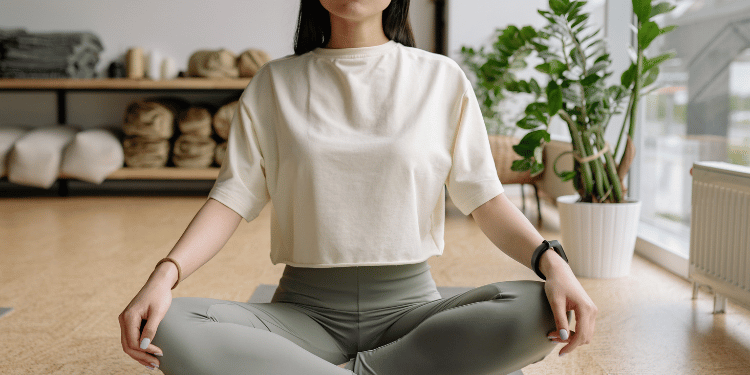
Each of these three habits — mindfulness, journaling and physical movement — is powerful on its own, but the real potential for self-care and mental health lies in their synergy. Practiced together, they create a virtuous cycle that feeds itself and amplifies the benefits.
- Mindfulness and journaling: Full attention sharpens your ability to observe your thoughts and emotions, which makes journal writing deeper and more revealing. The journal, in turn, can be a place to record your mindfulness experiences, cementing the practice.
- Movement and mindfulness: Exercise such as yoga or walking in nature already incorporates elements of mindfulness, helping you connect with your body and your surroundings. Full attention can make any physical activity more enjoyable and less of an obligation.
- Journaling and movement: A journal can be used to plan your physical activity, record your progress and celebrate your achievements, increasing motivation. Writing can also help process any frustration or difficulty that arises along the way.
Integrating these habits is not about adding more tasks to your list but about approaching them with a self-care and mental health mindset, seeing them as investments in your quality of life. In 2026, start experimenting with how these pillars complement one another, creating a solid foundation for your well-being.
Overcoming Obstacles and Staying Consistent in 2026
Putting new habits in place can be challenging, and staying consistent is harder still. With the right strategies and a clear understanding of why self-care and mental health matters, however, you can succeed in 2026.
Tips for Staying Consistent
- Start small and be kind to yourself: Do not try to change everything at once. Choose one habit to begin with, practice it for a few weeks and then add another. Bad days happen; do not blame yourself. Simply start again the next day.
- Create a realistic schedule: Block specific times in your calendar for these activities. Treat them as appointments with yourself that cannot be moved.
- Make self-care enjoyable: If self-care feels like a chore, it will be hard to sustain. Find ways to make mindfulness, journaling and movement genuinely pleasant for you.
- Find an accountability partner: Share your goals with a friend or family member. Having someone to support you and hold you to it can be a great motivator.
- Celebrate small wins: Acknowledge your effort and celebrate every step, however small. That reinforces the positive behavior.
- Keep learning: The more you understand the science behind self-care and mental health, the more motivated you will be to prioritize it.
- Be flexible: Life happens. There will be days when you cannot follow your plan perfectly. Adapt, but do not give up.
Remember, self-care is not a finish line but a continuous journey. In 2026, commit to that journey and you will reap the rewards of robust mental health and lasting well-being.
The Future of Well-Being: Self-Care as a Priority in 2026 and Beyond
As we move into 2026, understanding and valuing self-care and mental health becomes increasingly critical. Society is beginning to recognize that mental health matters as much as physical health, and that the two are intrinsically linked.
The three habits we have explored — mindfulness, journaling and physical movement — are only the tip of the iceberg of what self-care can offer. They do, however, represent an accessible and scientifically grounded starting point for anyone seeking meaningful change. By building them into your life, you are not only improving your own well-being; you are contributing to a wider culture of awareness and care around mental health.
In 2026, more companies, schools and communities are expected to adopt practices that promote mental well-being, but the most powerful change starts with the individual. By prioritizing your self-care and mental health, you become an agent of change, inspiring those around you to do the same.
Allow yourself the kindness of looking after yourself. Give yourself the chance to experience the clarity, calm and resilience these habits can bring. 2026 could be the year you finally take charge of your mental health, building a solid foundation for a fuller and happier life. Start today, with one small step, and watch the change take hold.
Further Resources for Deepening Your Self-Care in 2026
For anyone who wants to go beyond the three fundamental habits of self-care and mental health, there are many resources available. Going deeper into each area can bring further benefits and insight to your well-being journey in 2026.
For Mindfulness
- Meditation apps: Headspace, Calm and Insight Timer offer guided meditations for every level, from beginner to advanced.
- Books: “Mindfulness: A Practical Guide to Finding Peace in a Frantic World” by Mark Williams and Danny Penman, or “The Power of Now” by Eckhart Tolle.
- Online courses: Many mindfulness centers offer introductory and advanced courses, some free and some paid, that can deepen your understanding and practice.
For Journaling and Emotional Expression
- Journal prompts: Search online for “journal prompts for self-knowledge” or “therapeutic journaling questions” to find inspiration.
- Books: “Journal to the Self” by Kathleen Adams, or “The Artist’s Way” by Julia Cameron, which introduced the morning pages practice.
- Digital tools: Apps such as Journey, Day One and Penzu offer features like password protection, tags and reminders to make the habit easier.
For Physical Movement
- Online classes: Platforms such as YouTube, Peloton and Gaia (for yoga) offer a vast range of classes for different types of exercise and fitness levels.
- Workout apps: Nike Training Club, Strava (for running and cycling) and Fitbit (for general activity tracking) can help you monitor progress and stay motivated.
- Getting out into nature: Local parks, trails and nature reserves offer perfect settings for walking, running or simply being outdoors.
Remember that self-care and mental health is a personal journey. What works for one person may not work for another. Try different approaches, adapt them to your needs and find what genuinely resonates with you. What matters is staying curious and staying committed to your own well-being in 2026 and the years that follow. Your mental health is an investment worth making.