
Advertisement
Visualisation Techniques: Ease Stress With Your Mind in 5 Steps
Discover the power of the mind to find calm and well-being.
Visualisation, often underestimated, is an ancient technique used across many cultures and contemplative traditions. It consists of creating vivid, detailed mental images of scenes, sensations or desired outcomes. In the context of stress relief, visualisation becomes a mental refuge — a sanctuary where we can step away from external worries and find deep peace and relaxation. It is not mere fantasy; it is a practice supported by neuroscience that can alter the chemistry of the brain, reduce levels of cortisol (the stress hormone) and foster a lasting sense of well-being.
This article is a complete guide for anyone wanting to learn and apply visualisation for stress in their own life. We will look at what visualisation is and how it works, clear up some common misconceptions and, most importantly, set out a practical five-step method you can start using today. Get ready for a journey of self-discovery and calm, in which your mind becomes your greatest ally against stress.
Advertisement
What Is Visualisation, and How Does It Help With Stress?
Visualisation is the ability to form mental images. It is not only about “seeing” with the mind’s eye but about involving every sense: hearing, feeling, smelling and even tasting. When we picture a peaceful place, for instance, we are not only imagining the landscape but also the sound of the waves, the smell of the breeze, the feel of sand underfoot and the salt in the air. That multisensory immersion is what makes visualisation so potent.
But how exactly does visualisation for stress work? Our brains cannot fully distinguish between a lived experience and a vividly imagined one. When you picture a relaxing scene, your brain reacts as if you were really there. That sets off a series of physiological responses that are the opposite of the stress response. The parasympathetic nervous system, responsible for “rest and digest”, is activated, while the sympathetic “fight or flight” system is dialled down.
That means visualisation can:
Advertisement
- Lower heart rate and blood pressure: By simulating a state of relaxation, the body slows the functions that stress accelerates.
- Relax the muscles: Muscular tension is a common stress response. Visualisation can help release it.
- Reduce stress hormone levels: Cortisol and adrenaline, which in excess are harmful to health.
- Improve mood and mental clarity: Focusing on positive images frees the mind from negative thought patterns.
- Support more restorative sleep: A relaxed mind before bed leads to better-quality rest.
Practising visualisation for stress regularly not only offers immediate relief; it also strengthens your capacity to handle stressful situations in future. It is like a muscle: the more you exercise it, the stronger and more resilient it becomes.
Setting the Scene: The Ideal Environment for Visualisation
Before we get to the five practical steps, it helps to understand that the environment in which you practise can significantly affect how well it works. The beauty of visualisation is that it can be done anywhere, but creating a temporary sanctuary can deepen the experience.
Choose a quiet place
Look for somewhere you will not be interrupted. It could be your bedroom, a quiet corner of the house, a park or even your parked car. What matters is that it feels safe and comfortable enough for you to disconnect from the outside world.
Minimise distractions
Turn off your phone, the television and anything else that might pull your attention. If you can, let the people around you know you need a few minutes of privacy. A mind free of interruptions goes deeper into the visualisation.
Comfort is essential
Sit or lie in a comfortable position. Use cushions, a light blanket or anything else that helps you relax physically. Tight or uncomfortable clothing is a distraction, so choose something loose and pleasant.
Think about the senses
- Light: Soft lighting or semi-darkness supports relaxation. Candles or indirect lamps work well.
- Sound: If the room is very quiet, you can use relaxing music, natural sounds (waves, rain, birdsong) or white noise to mask other noises and help you concentrate.
- Scent: Aromatherapy can deepen relaxation. Essential oils such as lavender, chamomile or sandalwood can be diffused or applied to pulse points.
Remember that these are only aids. The essence of visualisation for stress lies in your mind. Optimising the environment simply creates more favourable conditions for the mind to give itself fully to the experience.
The 5 Steps to Easing Stress Through Visualisation
Now that we understand the power of visualisation and how to prepare the space, here are the practical steps for building the technique into your stress-management routine.
Step 1: Find Your Initial Calm With Conscious Breathing
The first step is preparing mind and body. That begins with the breath, a powerful anchor to the present moment.
- Comfortable position: Sit or lie down somewhere quiet. Close your eyes gently.
- Focus on the breath: Bring your attention to your breathing. Do not try to change it, simply observe the air moving in and out of your body. Feel your abdomen rise and fall.
- Deep breathing: After a few moments of observation, begin to deepen the breath. Inhale slowly through your nose for a count of four, feeling the air fill your lungs. Hold for a second or two. Exhale slowly through your mouth for a count of six, releasing all the air and feeling any tension dissipate.
- Repeat: Continue this deep, conscious breathing for 5 to 10 minutes, or until your body and mind feel calmer. This is the foundation of effective visualisation for stress.
Conscious breathing calms the nervous system and signals to your body that it is safe to relax, setting the stage for the mental journey to come.
Step 2: Build Your Mental Sanctuary
This is the heart of visualisation for stress. Now that you are relaxed, it is time to construct your personal refuge.
- Choose a scene: Think of a place you find absolutely peaceful and safe. It could be an empty beach, a lush forest, a flowering garden, a serene mountainside, or somewhere you invent entirely. What matters is that it evokes peace and well-being.
- Visual detail: Begin to “see” this place with your mind’s eye. What are the colours? Is there sunlight, or a soft dusk? What is the vegetation like, the water, the sky? Notice the smallest details.
- Bring in the other senses: Now add sound: waves breaking gently on the shore, birdsong, leaves rustling in the wind. And the smells: sea salt, damp earth, fresh flowers. Feel the temperature of the air on your skin, the soft breeze, the texture of the ground beneath your feet or the seat you are on. If there is something to taste in this place, imagine that too.
- Let yourself be there: Immerse yourself completely in this mental sanctuary. Feel the peace and safety it offers. This is your place, and you are entirely safe and relaxed in it.
The more detail and the more senses you bring in, the more real and more effective your visualisation for stress will be. Stay in this sanctuary as long as you like, absorbing its calm.
Step 3: Release the Stress and Tension
Once you are settled in your mental sanctuary, use the power of visualisation to actively release accumulated stress and tension.
- Identify the tension: Pay attention to your body. Where do you feel the stress? It might be in your shoulders, your neck, your forehead, your stomach. Picture that tension as a dark, dense energy or as a tight knot.
- Visualise the release: Within your sanctuary, imagine a way of letting that tension go. You might see it leaving your body as dark smoke on each exhale, dissolving into the air. Or you might picture a waterfall of healing light washing the tension away. You could even imagine holding the tension in your hands and throwing it into a still lake, watching it disappear.
- Focus on the relief: As the tension leaves, concentrate on the sense of relief and lightness taking its place. Feel your muscles soften, your breathing ease and your body grow lighter.
This step is crucial to visualisation for stress, because it turns imagination into an active tool for clearing and healing.

Step 4: Fill Yourself With Positive Sensations
Having released the stress, it is time to fill the space with positive emotion and sensation.
- Choose a quality: Think of a quality or emotion you want to cultivate: peace, calm, confidence, joy, love, healing.
- Visualise it flowing in: Imagine that quality as a bright, warm light in a colour you associate with it — blue for calm, green for healing, gold for joy. Picture that light entering through the top of your head and spreading through every cell, every organ, every muscle.
- Feel the change: Feel that positive energy filling you, warming you from the inside out. Feel the peace deepen, the calm intensify. Let yourself be absorbed by those sensations.
- Affirmations (optional): As the light fills you, you can silently repeat phrases such as: “I am at peace”, “I am calm”, “I am safe”.
This step of visualisation for stress does not only counter stress; it also strengthens your emotional resilience and your general well-being.
Step 5: Come Back Gradually and Integrate
The last step is returning gently to waking awareness, carrying with you the calm you have cultivated.
- Give thanks: Silently thank your mental sanctuary, and yourself, for giving this time to your well-being.
- Move slowly: Begin bringing your attention back to your physical body. Wiggle your fingers and toes, stretch gently.
- Open your eyes: When you feel ready, open your eyes slowly. Let them adjust to the light and the room.
- Hold on to the feeling: Try to keep that sense of peace and relaxation for the rest of your day. Remember that you can return to your mental sanctuary at any time, whenever you need a moment of visualisation for stress.
This gradual return helps integrate the benefits of the practice into daily life, making the transition smoother and the effects longer-lasting.
Essential Tips for Getting More From Your Practice
To make sure your visualisation for stress practice is as effective as possible, consider the following:
Consistency is key
Like any skill, visualisation improves with practice. Try to give it 10 to 20 minutes a day. Regularity matters more than duration. Even five minutes of focused visualisation can make a real difference.
Be patient with yourself
At first your mind may wander, or you may struggle to create vivid images. That is completely normal. Do not get frustrated. Gently bring your attention back to the visualisation whenever it drifts.
Use guided scripts
If you are starting out, guided visualisation audio or video can help. There are many free and paid resources online that can familiarise you with the technique and deepen the experience. A guide’s voice is excellent support for holding your focus during visualisation for stress.
Involve all the senses
To repeat: do not limit yourself to what you “see”. The more senses you can bring in — hearing, smell, touch, taste — the more real and immersive the experience, and the more powerful the stress-relief effect.
Make it your own
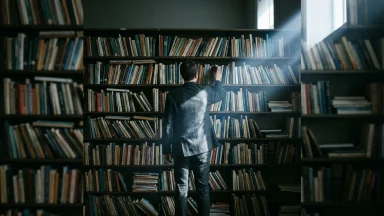
Your mental sanctuary is unique to you. There is no right or wrong. If a place in nature does not resonate, perhaps a magical castle, a spaceship or an old library is your place of peace. Adapt visualisation for stress to your own preferences.
Combine it with other well-being practices
Visualisation is a powerful tool, but it can be more effective still when combined with other practices such as mindfulness meditation, yoga, regular exercise, a healthy diet and adequate sleep. A balanced lifestyle amplifies the benefits of each.
Keep a record
A visualisation journal can be useful. Note what you pictured, how you felt before and after, and any insights that came up. It can help you spot patterns and understand better how visualisation for stress works for you.
Myths and Facts About Visualisation
Despite its effectiveness, visualisation is still surrounded by a few myths. Let us clear some up:
Myth 1: You have to be “good” at visualising
The reality: There is no such thing as being good at visualising. Some people have a stronger visual imagination than others, but everyone can practise. Even if you do not “see” clear images, the intention and the feeling are what actually matter. Practice strengthens the capacity.
Myth 2: It is just childish fantasy
The reality: Visualisation is playful and creative, but its physiological and psychological effects are very real. It is a serious tool for self-knowledge and stress management, supported by research in psychology and neuroscience. visualisation for stress is a recognised therapeutic technique.
Myth 3: You need long stretches of time
The reality: Longer sessions can be beneficial, but even a few minutes of focused visualisation makes a difference. In moments of acute stress, a quick one- or two-minute visualisation can help you re-centre. Quality matters more than quantity.
Myth 4: It is a magic solution for everything
The reality: Visualisation is a powerful tool, but it is not a miracle cure for every mental or physical health problem. It is a valuable complement to other forms of treatment and well-being practice. For severe stress or anxiety, it is always advisable to seek help from a health professional.
The Science Behind Visualisation and Stress
The effectiveness of visualisation for stress is not merely anecdotal; it is backed by a growing body of research. When we visualise, we activate the same neural networks that would fire if we were actually living the situation. Picturing a lemon being cut, for instance, can make your mouth water even with no lemon in sight.
In the context of stress that is particularly relevant. Chronic stress activates the hypothalamic–pituitary–adrenal axis, releasing hormones such as cortisol. Visualising peaceful, relaxing scenes can modulate that axis, leading to reduced cortisol production. Studies have shown that regular visualisation practice can significantly lower perceived stress, improve mood and even support immune function.
Visualisation also stimulates the parasympathetic nervous system, which restores the body to a state of calm. That means a lower heart rate, muscular relaxation and a general sense of ease. By training the mind to focus on positive images and sensations, you are literally reconditioning your brain to respond to stress more adaptively. It is a form of mental self-regulation that lets you take the reins of your stress response rather than being at its mercy.
Bringing Visualisation Into Your Day
To get the benefits of visualisation for stress, you need to build it consistently into your routine. It does not have to be a long, formal practice every day. Small moments of visualisation can be remarkably effective.
Morning
Start the day with 5 to 10 minutes. Picture yourself having a calm, productive, positive day. See yourself handling challenges with composure and confidence. That can set the tone for everything that follows, priming your mind for resilience.
During the working day
If you feel overloaded or stressed at work, take a one- or two-minute break. Close your eyes, breathe deeply and picture your mental sanctuary. Let yourself feel the calm briefly before returning to your tasks. That micro-pause of visualisation for stress can recharge your energy and sharpen your focus.
Before bed
Visualisation before sleep is one of the most effective ways to counter insomnia and support restorative rest. Instead of worrying about the day’s events or tomorrow’s list, picture yourself in your peaceful place, feeling safe and relaxed. That can calm the mind and prepare you for deep sleep.
For specific situations
Use visualisation to prepare for stressful events: an important presentation, a difficult conversation, a medical appointment. Picture the outcome you want, yourself calm and confident, and the process going smoothly. That can reduce anticipatory anxiety and improve your performance.
Conclusion: Your Mind as a Source of Calm
visualisation for stress is more than a simple relaxation technique; it is a powerful skill you can develop to change your relationship with stress. By following the five steps set out in this guide, you will learn to reach an inner refuge of peace and to use your mind’s innate capacity to support well-being and resilience.
Remember that easing stress is an ongoing process. There will be days when visualising comes easily and days when it is harder. What matters is consistency, patience and self-compassion. Every time you give time to this practice, you are investing in your mental health and emotional well-being.
Start today by exploring the power of your imagination. Allow yourself to create worlds of calm and healing inside your own mind. With regular practice of visualisation for stress, you will find that calm and balance are not distant states but internal resources available at any moment. Your mind is an extraordinary tool; learn to use it to live a more peaceful, fuller life.